
 Image 1 of 2
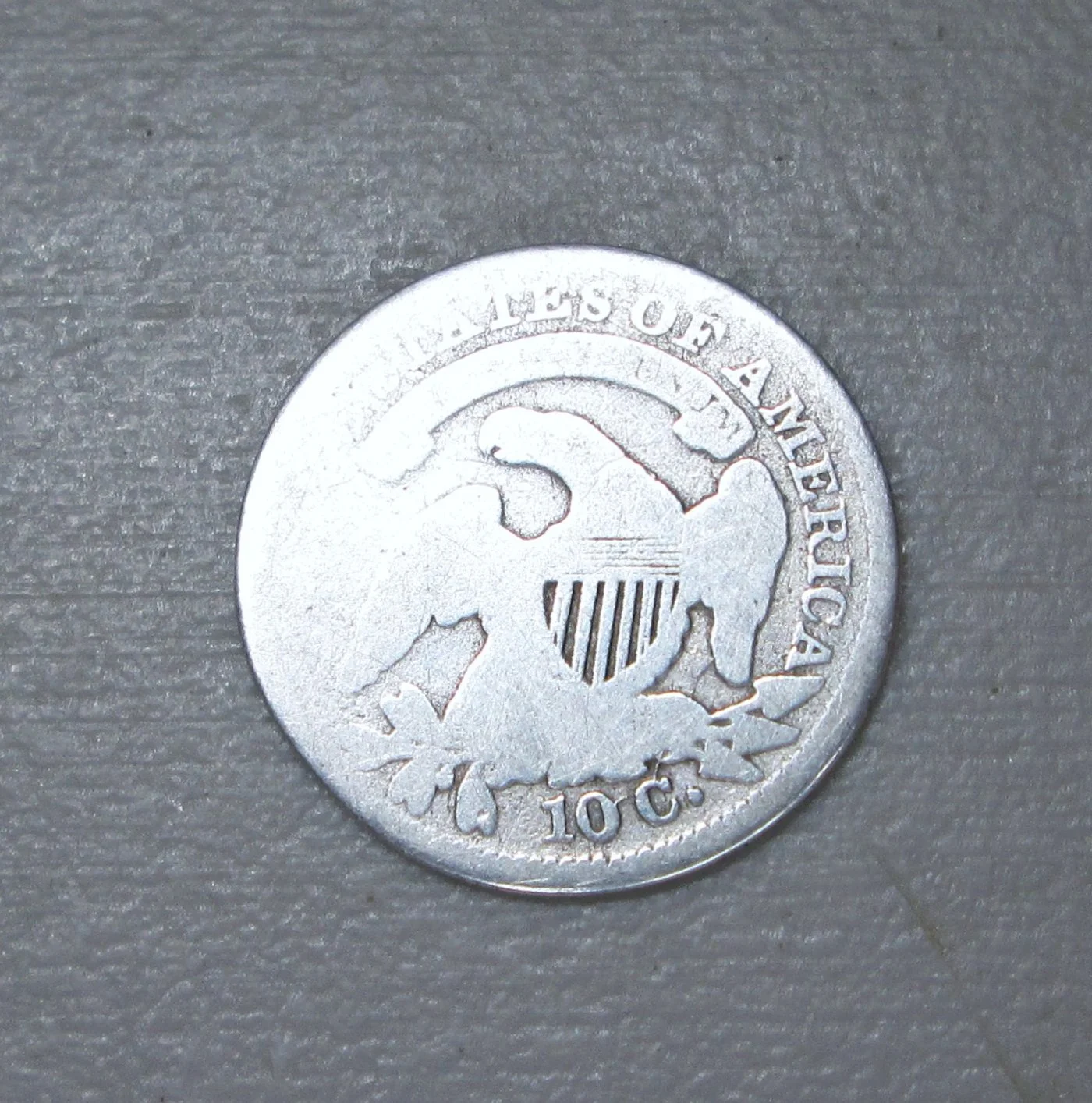 Image 2 of 2
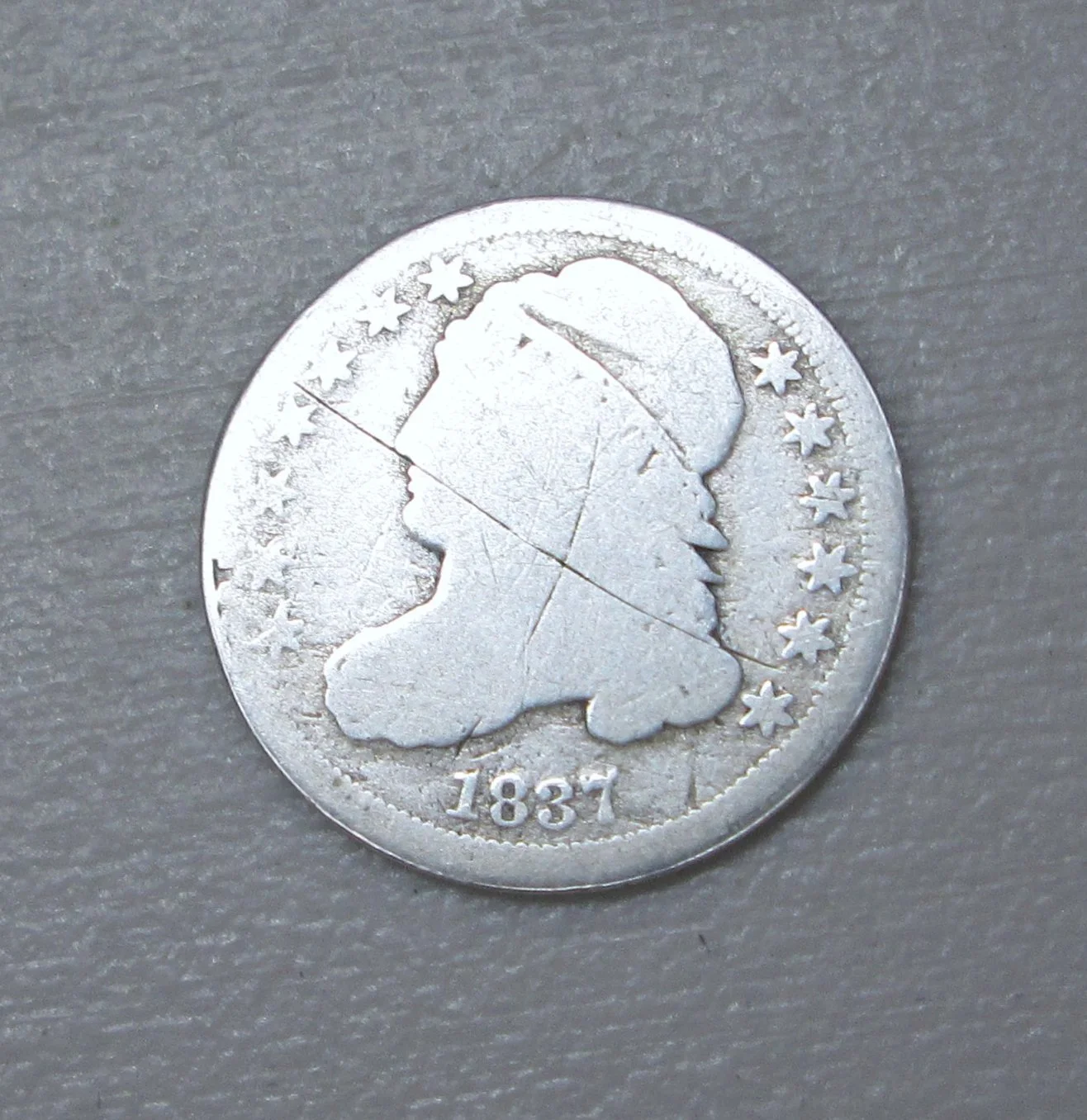
Introduced in 1809, the Capped Bust dime adapted John Reich’s design first seen on the 1807 half dollar. The obverse depicts Liberty wearing a band-inscribed cap over flowing tresses, her draped bust secured by a clasp, framed by thirteen stars (seven left, six right) and the date below. On the reverse, an eagle holds arrows and an olive branch under a scroll reading E PLURIBUS UNUM, flanked by UNITED STATES OF AMERICA and the 10C. denomination.
Spanning 1809 to 1827 with intermittent gaps, the series features wider 18.8 mm planchets. While common dates are easy to find in grades up to Extremely Fine or About Uncirculated, fully Mint State coins are scarce and striking quality varies considerably across issues.
In 1828, the Mint introduced a close-collar production method, trimming the planchet size to approximately 17.9 mm and tightening the border denticles—creating the "Small Dentil" sub-type produced through 1837. This refined style also features slightly smaller stars and subtle restyling. While no single date in this 1828–1837 run is a major rarity, high-grade Uncirculated specimens demand patience and a premium.
Introduced in 1809, the Capped Bust dime adapted John Reich’s design first seen on the 1807 half dollar. The obverse depicts Liberty wearing a band-inscribed cap over flowing tresses, her draped bust secured by a clasp, framed by thirteen stars (seven left, six right) and the date below. On the reverse, an eagle holds arrows and an olive branch under a scroll reading E PLURIBUS UNUM, flanked by UNITED STATES OF AMERICA and the 10C. denomination.
Spanning 1809 to 1827 with intermittent gaps, the series features wider 18.8 mm planchets. While common dates are easy to find in grades up to Extremely Fine or About Uncirculated, fully Mint State coins are scarce and striking quality varies considerably across issues.
In 1828, the Mint introduced a close-collar production method, trimming the planchet size to approximately 17.9 mm and tightening the border denticles—creating the "Small Dentil" sub-type produced through 1837. This refined style also features slightly smaller stars and subtle restyling. While no single date in this 1828–1837 run is a major rarity, high-grade Uncirculated specimens demand patience and a premium.