
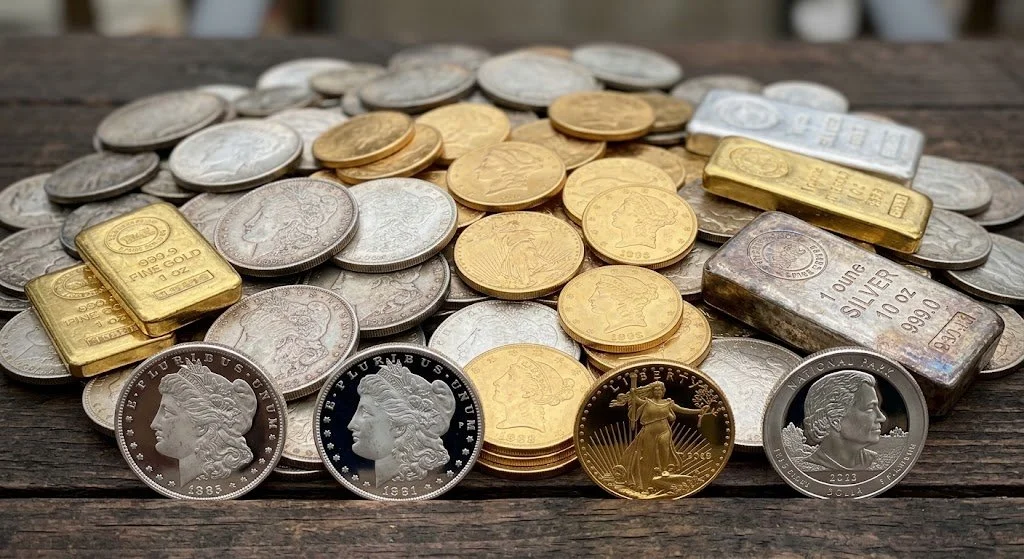
Welcome to your new source of quality coins and bullion!
Discover your next favorite coin here with our fantastic selection of US coins, Foreign coins, and Bullion.
Featured Coins
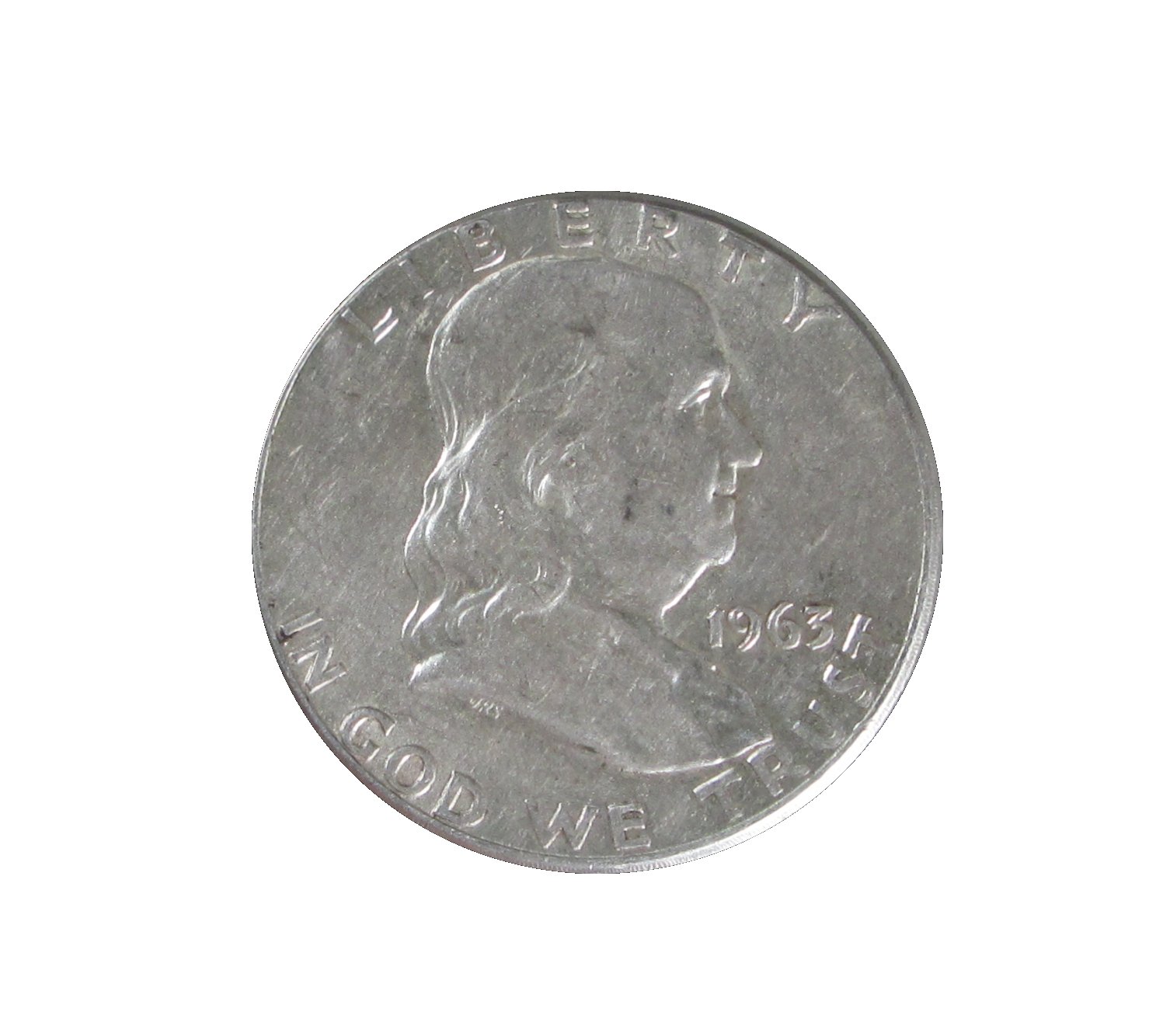
The Franklin Half Dollar was a silver half-dollar coin the United States Mint produced from 1948 to 1963. The coin featured the likeness of founding father Benjamin Franklin on the obverse and the Liberty Bell on the reverse. It was the first circulating half-dollar to feature a historical portrait instead of an allegorical portrait of Liberty.
Photo is example only, the item will look similar (about same grade) to this photo though.
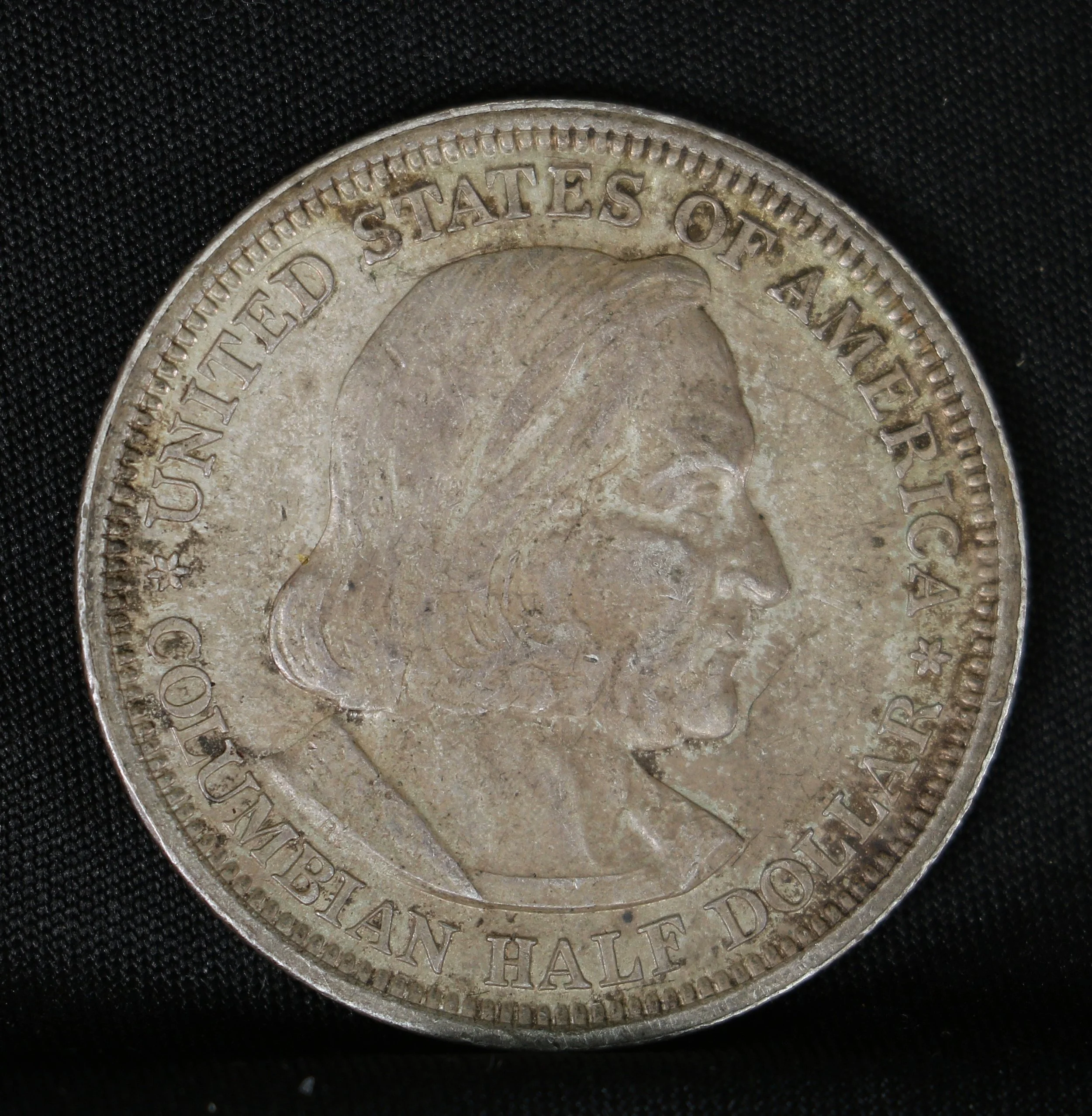
Following the first minting of the 1892 Columbian Exposition half dollar, the first official United States commemorative coin, the US Mint released a second run of Columbian halves in 1893. While the World's Columbian Exposition was intended to open in 1892 to honor the 400th anniversary of Christopher Columbus' transatlantic expedition in 1492, the event did not start until 1893. The United States Mint sold more than 1.5 million of the 1893 Columbian half dollars at the fair for $1 each.
The Columbian Expo half dollars were designed by Charles E. Barber and George T. Morgan. Though seeing a large mintage, the 1893 Columbian half dollar was widely distributed, many did not wind up in proper coin collections but rather were spent. In fact, most Columbian halves today show wear.
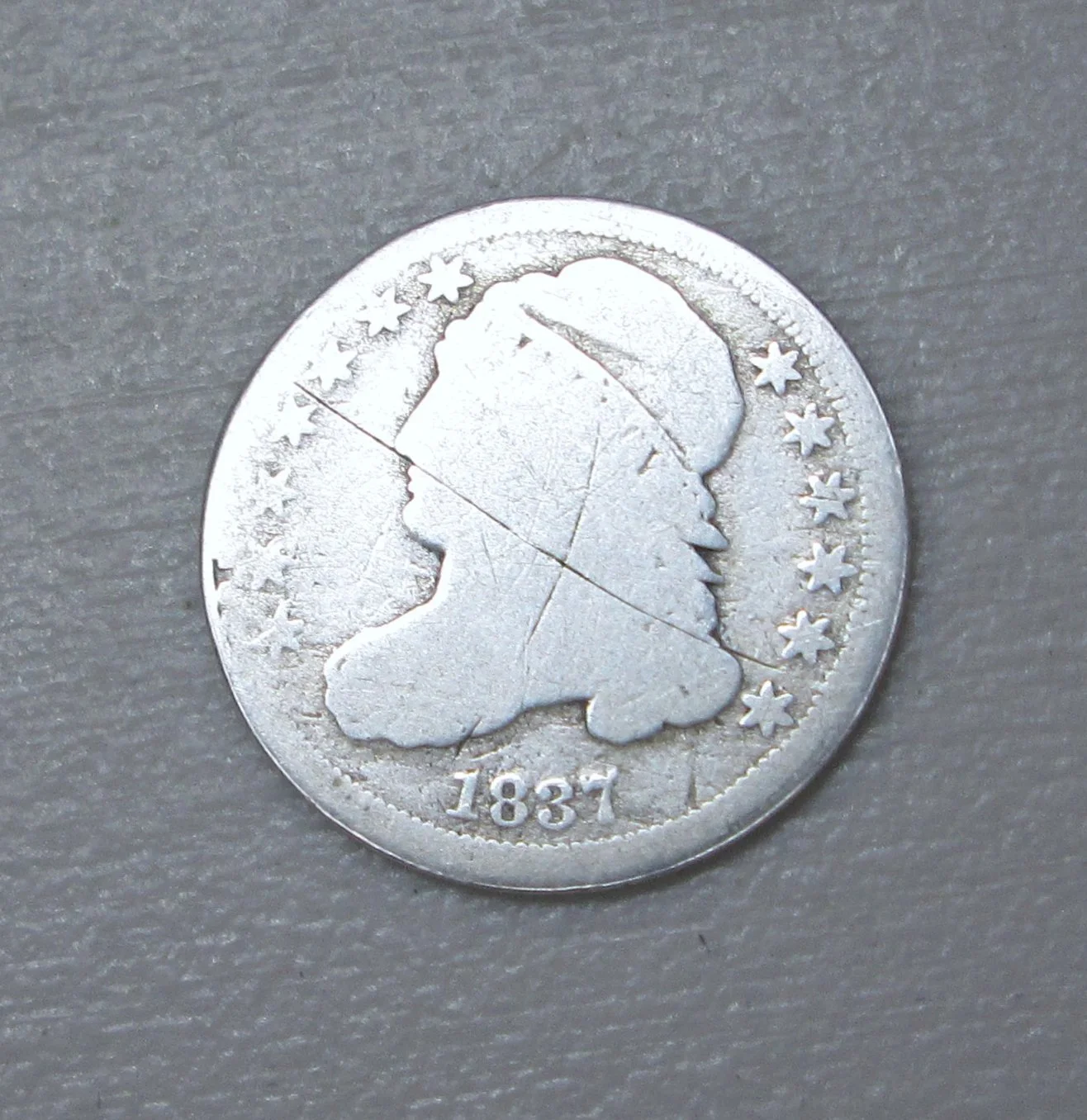
Introduced in 1809, the Capped Bust dime adapted John Reich’s design first seen on the 1807 half dollar. The obverse depicts Liberty wearing a band-inscribed cap over flowing tresses, her draped bust secured by a clasp, framed by thirteen stars (seven left, six right) and the date below. On the reverse, an eagle holds arrows and an olive branch under a scroll reading E PLURIBUS UNUM, flanked by UNITED STATES OF AMERICA and the 10C. denomination.
Spanning 1809 to 1827 with intermittent gaps, the series features wider 18.8 mm planchets. While common dates are easy to find in grades up to Extremely Fine or About Uncirculated, fully Mint State coins are scarce and striking quality varies considerably across issues.
In 1828, the Mint introduced a close-collar production method, trimming the planchet size to approximately 17.9 mm and tightening the border denticles—creating the "Small Dentil" sub-type produced through 1837. This refined style also features slightly smaller stars and subtle restyling. While no single date in this 1828–1837 run is a major rarity, high-grade Uncirculated specimens demand patience and a premium.

The Silver Buffalo is a Silver bullion round designed after James Earle Fraser's renowned Indian Head and Buffalo Nickel series. The Silver Buffalo's reverse design features an American buffalo, which is modeled after Black Diamond – the New York Central Park Zoo's resident buffalo in the early 20th century. This image was originally sketched by James Earle Fraser while visiting the zoo, and the sketch later served as the basis for Fraser's final design.
James Earle Fraser's Indian Head Nickel design is regarded among the best designs of any U.S. coin. This round boasts the famous design with a listed .999 purity. The silver round is among one of the most popular ways to invest in Silver. 1 oz silver rounds can be an ideal way to purchase silver at a great price point for any investor, and the size allows for anything from an entry level investment to a bulk investment.
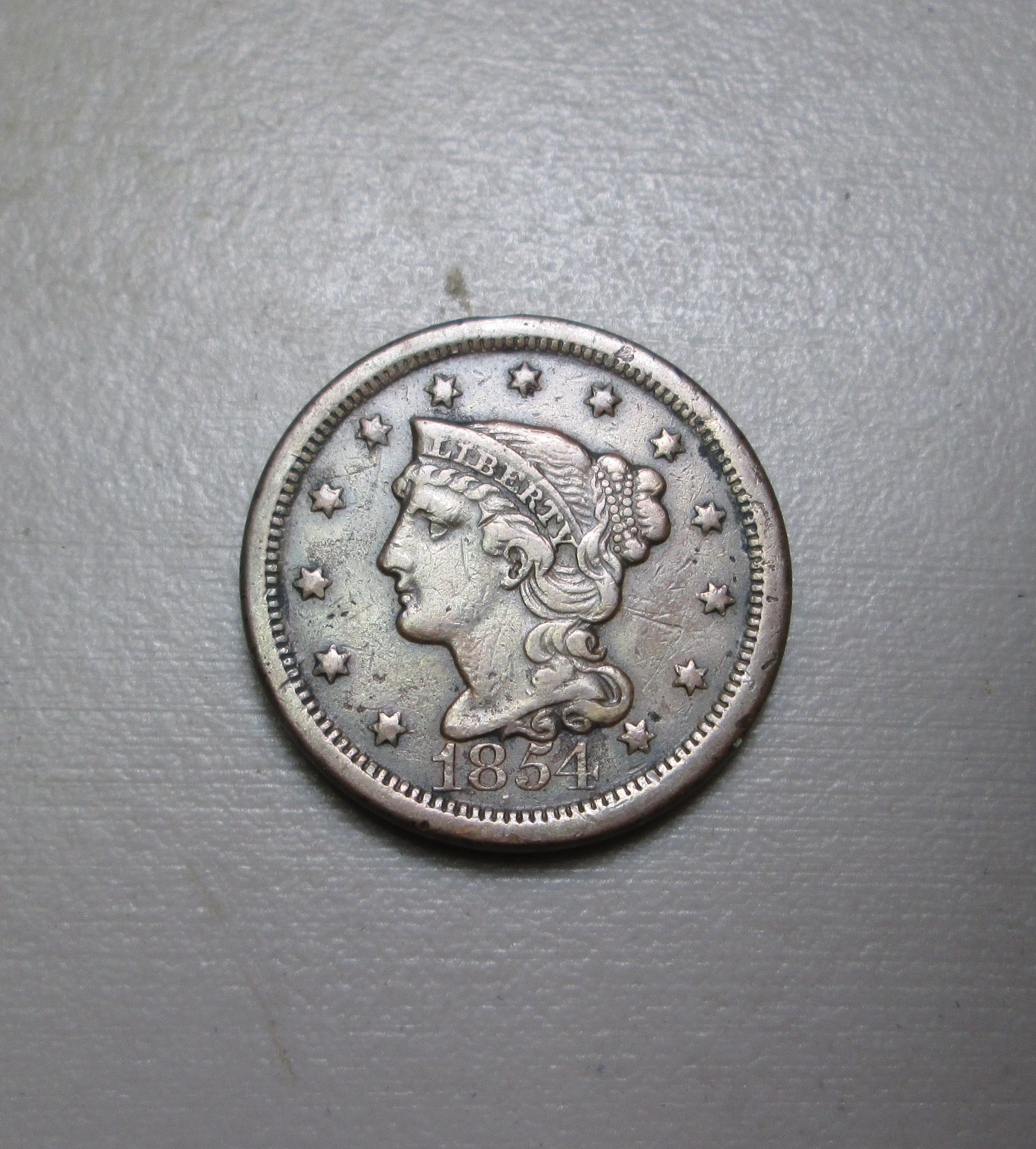
The final large-cent design began in late 1839 as a continuation of designer Christian Gobrecht’s refinements. After a number of adjustments to Liberty’s head through the late 1830s, the final “Petite Head with Braided Hair” design was temporarily set and used for the next four years. In late 1843, an added refinement was made to the features, resulting in the “Mature Head with Braided Hair” design. This design remained through the end of large-cent production. Production through this period was generous and peaked at almost 10 million minted in 1851. Only the last year, 1857, had a mintage below 1 Million (333,546). This design was replaced was a new, smaller coin of copper/nickel composition - the Flying Eagle cent.
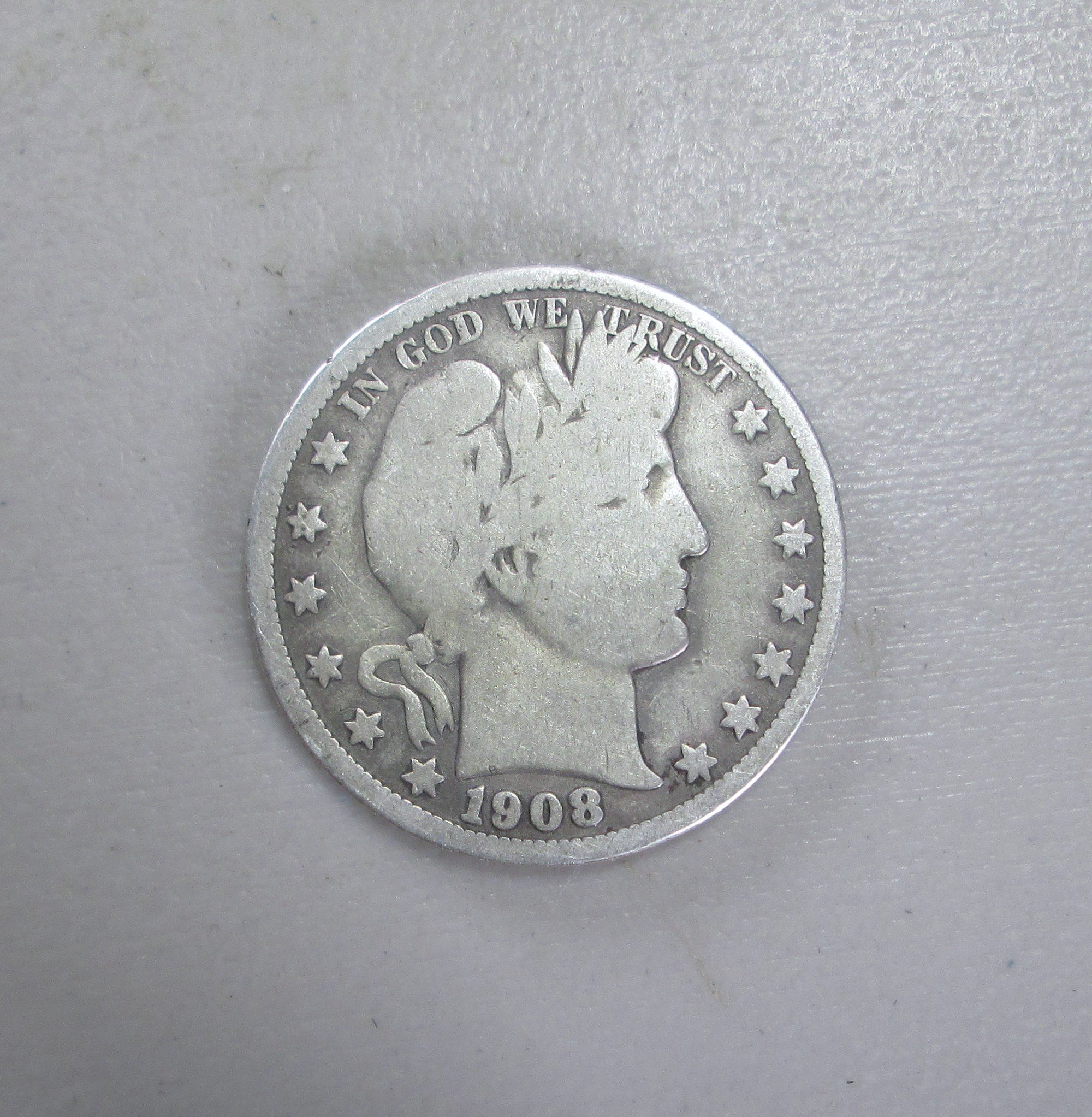
The Barber coinage includes the dime, quarter, and half dollar and was designed by US Bureau of the Mint Chief Engraver Charles E. Barber. They were minted between 1892 and 1916, though no half dollars were struck in the final year of the series (no 1916).
SOLD
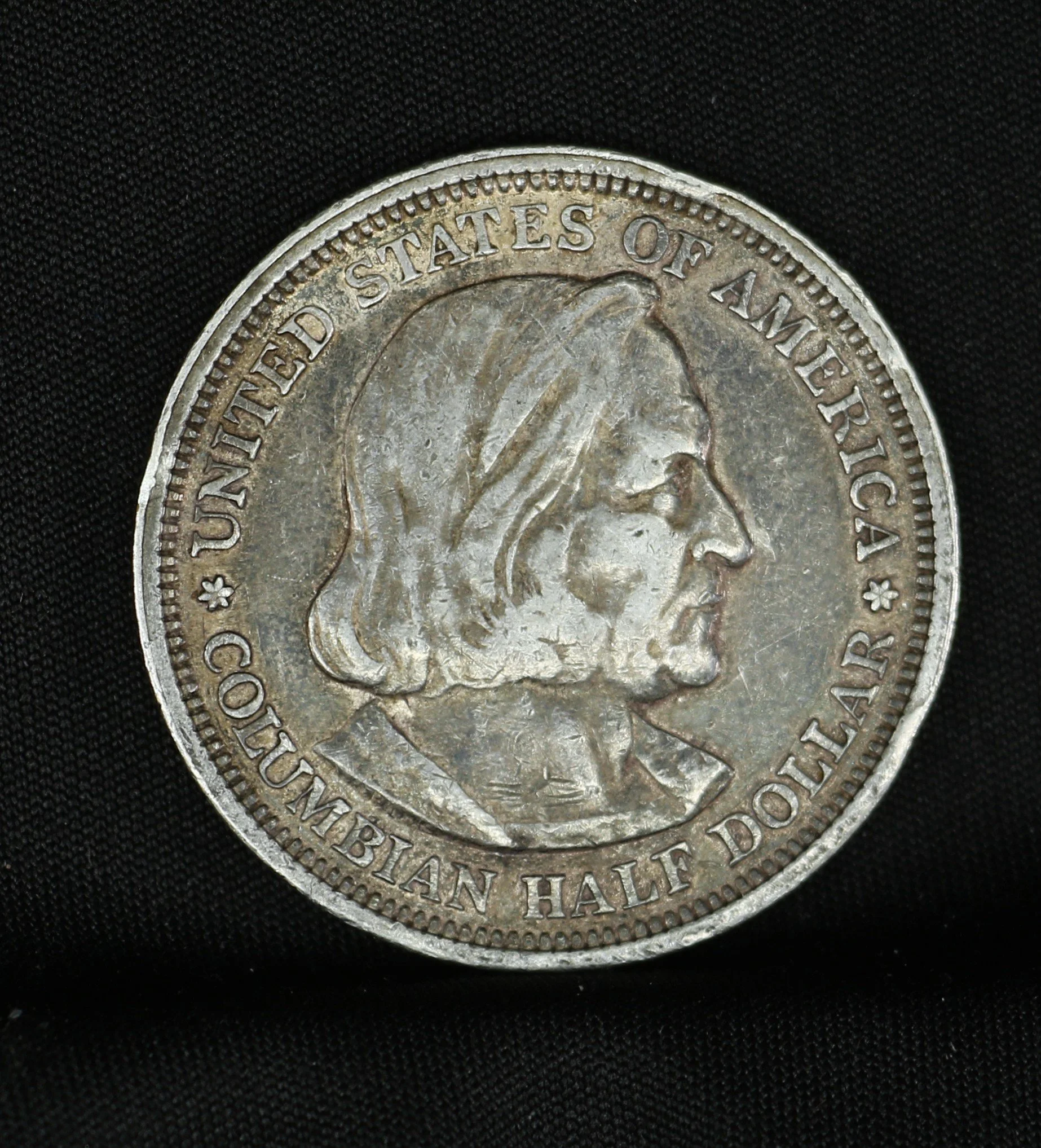
Following the first minting of the 1892 Columbian Exposition half dollar, the first official United States commemorative coin, the US Mint released a second run of Columbian halves in 1893. While the World's Columbian Exposition was intended to open in 1892 to honor the 400th anniversary of Christopher Columbus' transatlantic expedition in 1492, the event did not start until 1893. The United States Mint sold more than 1.5 million of the 1893 Columbian half dollars at the fair for $1 each.
The Columbian Expo half dollars were designed by Charles E. Barber and George T. Morgan. Though seeing a large mintage, the 1893 Columbian half dollar was widely distributed, many did not wind up in proper coin collections but rather were spent. In fact, most Columbian halves today show wear.
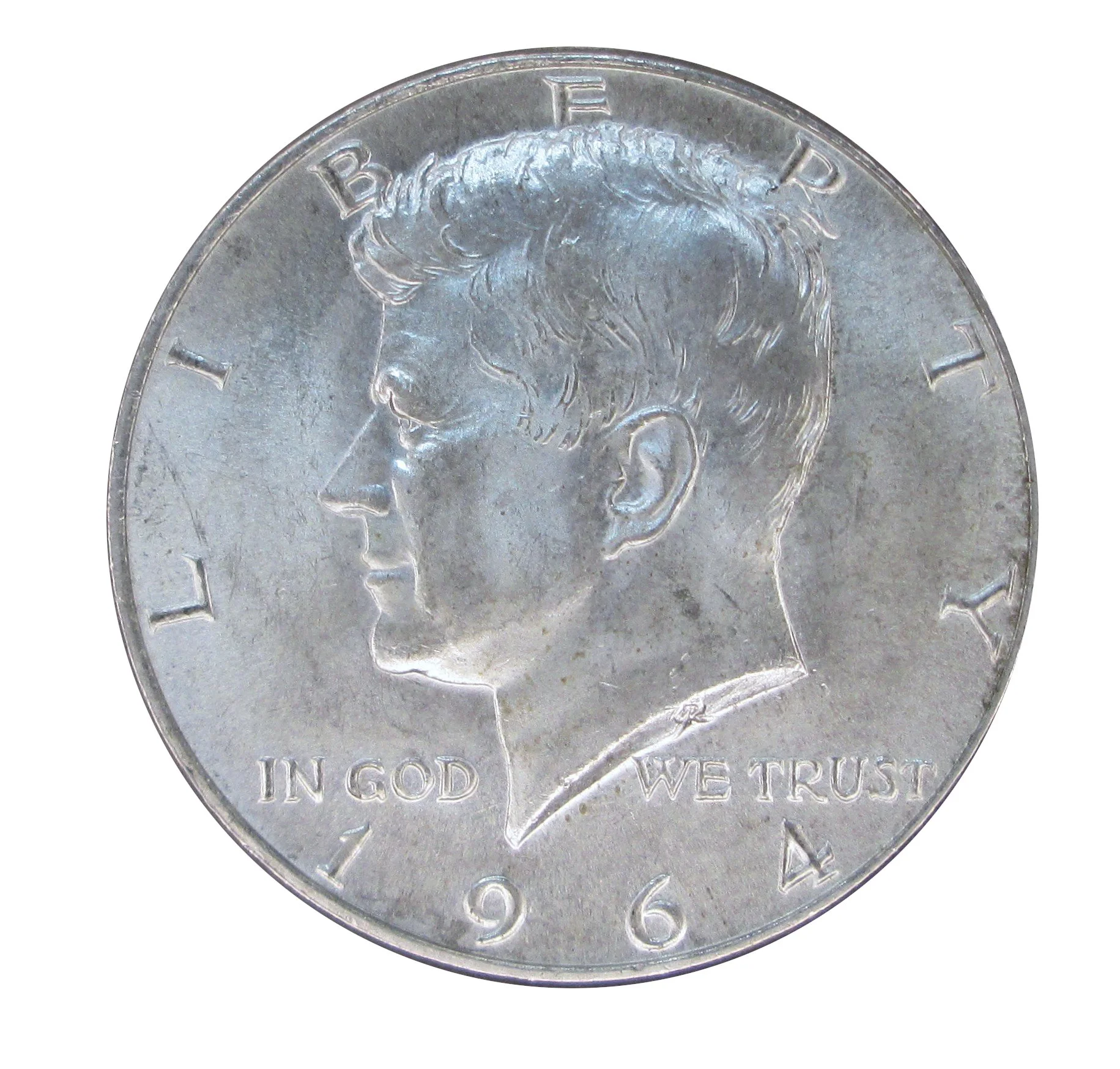
This is a 1964 Philadelphia Mint Kennedy Half Dollar. It is in Uncirculated Condition and has a nice luster.
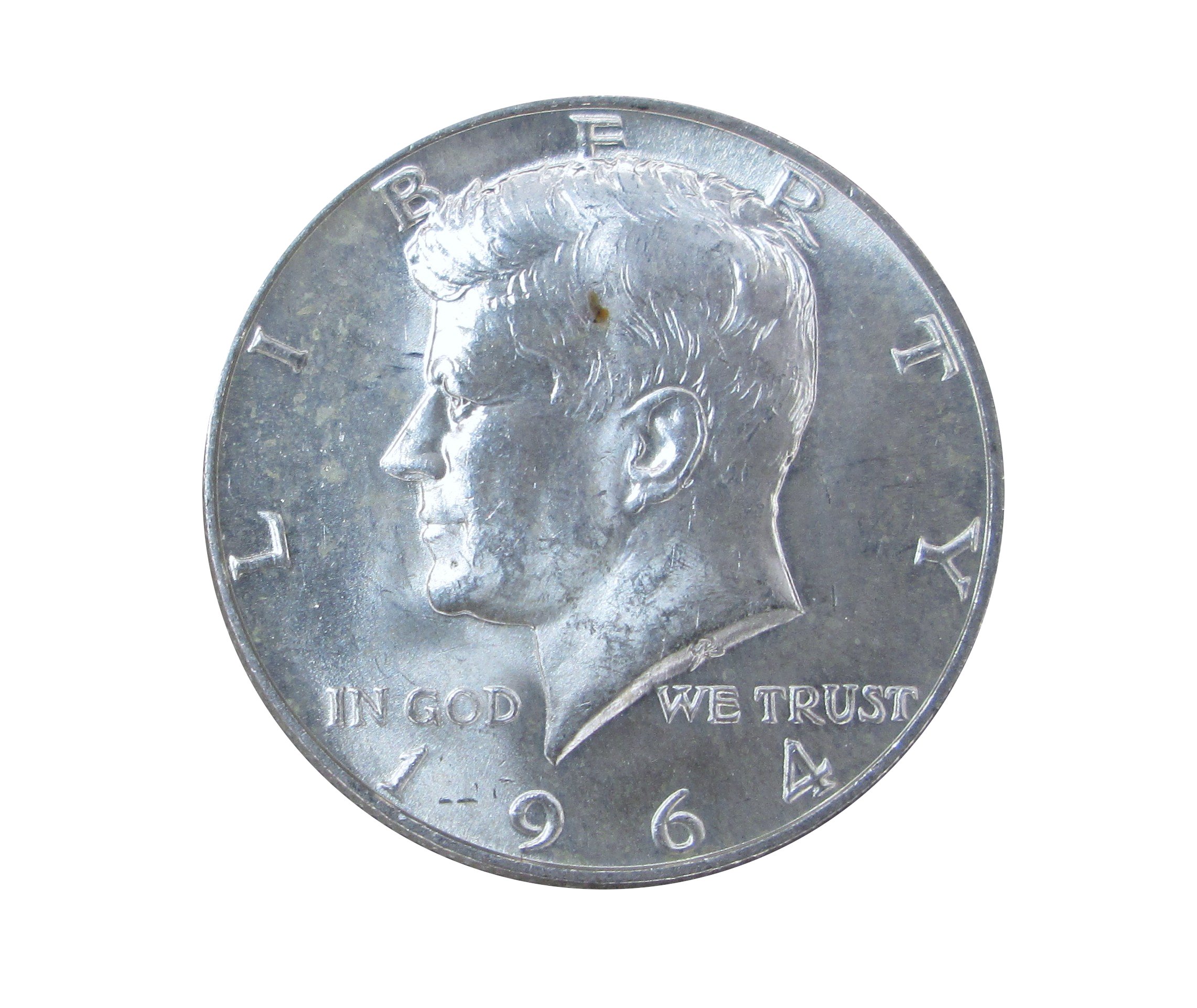
This is a 1964 Denver Mint Kennedy Half Dollar. It is in Uncirculated Condition and has a nice luster.
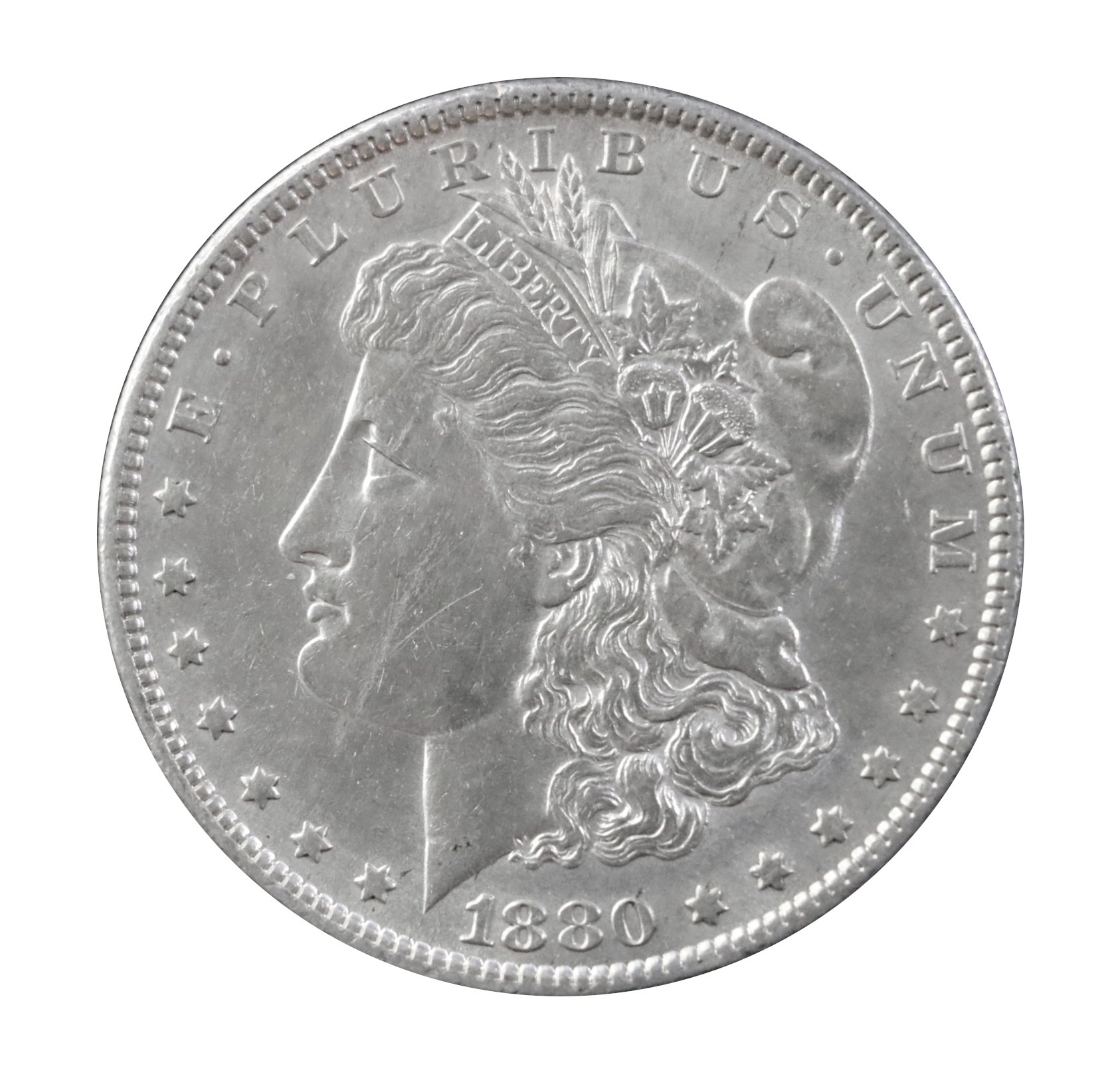
This is a 1880 New Orleans mint, Morgan dollar. It appears to be an uncirculated.
Minted from 1878 to 1904, then again in 1921, before retiring as America’s most popular coin. Morgan Dollars are called the “King of America’s Coins” for a good reason: they helped the United States grow the western frontier and fueled the engines of American industrialization. During the late 19th Century, the Morgan Dollar became a rallying point in politics between the Eastern Bankers, known as the “Goldbugs,” and the Western Silver Mining interests, dubbed the “Silverites.” They contributed to one of America’s major economic depressions, the Panic of 1893, and became a major political platform in the 1896 and 1900 Presidential elections. The “Gold” or Silver” bimetallism debate over the monetary standard gave the politicians much to argue about.
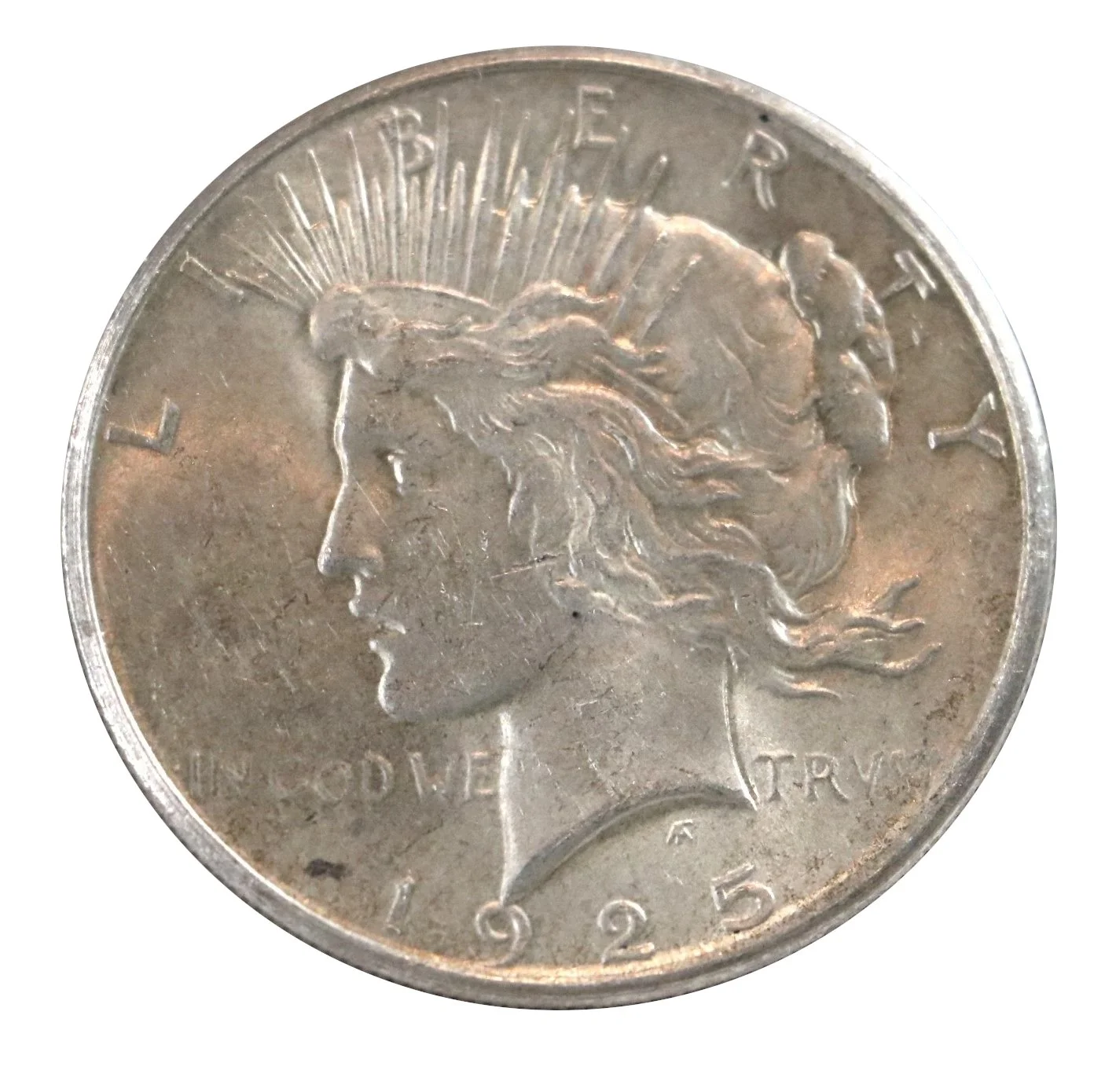
This coin is a 1925 Philadelphia minted Peace Dollar in Uncirculated condition.
To commemorate the end of World War I and honor world peace, the United States created the first Peace Dollar in late December 1921. This Silver Peace Dollar was produced intermittently from 1921 to 1928 and again in 1934 and 1935 at three United States Mint facilities in Denver, San Francisco, and Philadelphia. The mint marks on the Peace Dollar can be found on the reverse side of the coin, below the word ONE.
Designed by Anthony De Francisci in early 1921, a modern Art Deco Liberty Head with a crown of rays was depicted on the Obverse and a bold, majestic eagle at rest on a high mountain top, clutching the laurel wreath of Peach in his talons, on the reverse.
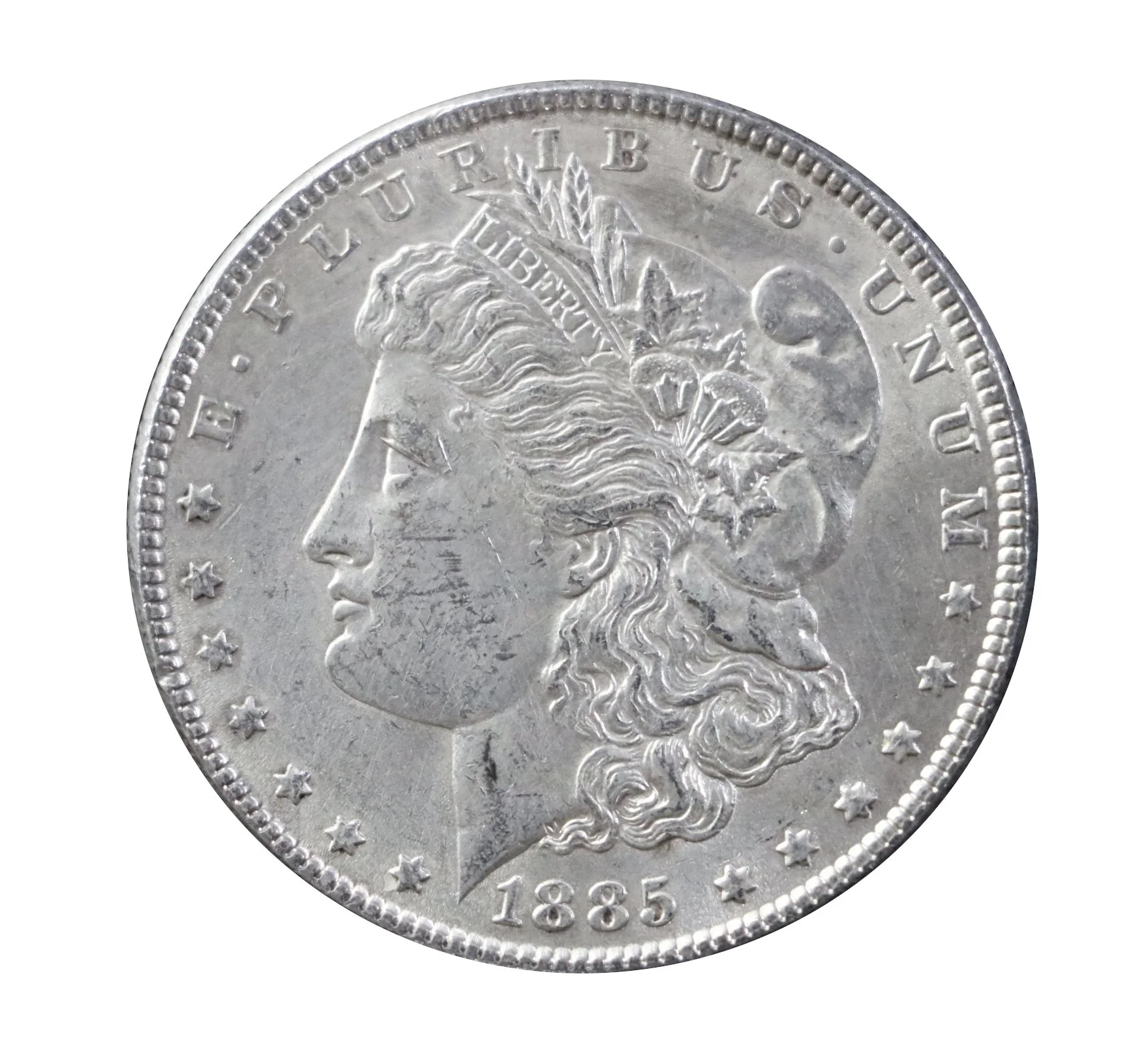
This is a 1885 Philadelphia mint, Morgan dollar. It appears to be an uncirculated.
Minted from 1878 to 1904, then again in 1921, before retiring as America’s most popular coin. Morgan Dollars are called the “King of America’s Coins” for a good reason: they helped the United States grow the western frontier and fueled the engines of American industrialization. During the late 19th Century, the Morgan Dollar became a rallying point in politics between the Eastern Bankers, known as the “Goldbugs,” and the Western Silver Mining interests, dubbed the “Silverites.” They contributed to one of America’s major economic depressions, the Panic of 1893, and became a major political platform in the 1896 and 1900 Presidential elections. The “Gold” or Silver” bimetallism debate over the monetary standard gave the politicians much to argue about.
Introduced in 1809, the Capped Bust dime adapted John Reich’s design first seen on the 1807 half dollar. The obverse depicts Liberty wearing a band-inscribed cap over flowing tresses, her draped bust secured by a clasp, framed by thirteen stars (seven left, six right) and the date below. On the reverse, an eagle holds arrows and an olive branch under a scroll reading E PLURIBUS UNUM, flanked by UNITED STATES OF AMERICA and the 10C. denomination.
Spanning 1809 to 1827 with intermittent gaps, the series features wider 18.8 mm planchets. While common dates are easy to find in grades up to Extremely Fine or About Uncirculated, fully Mint State coins are scarce and striking quality varies considerably across issues.
In 1828, the Mint introduced a close-collar production method, trimming the planchet size to approximately 17.9 mm and tightening the border denticles—creating the "Small Dentil" sub-type produced through 1837. This refined style also features slightly smaller stars and subtle restyling. While no single date in this 1828–1837 run is a major rarity, high-grade Uncirculated specimens demand patience and a premium.
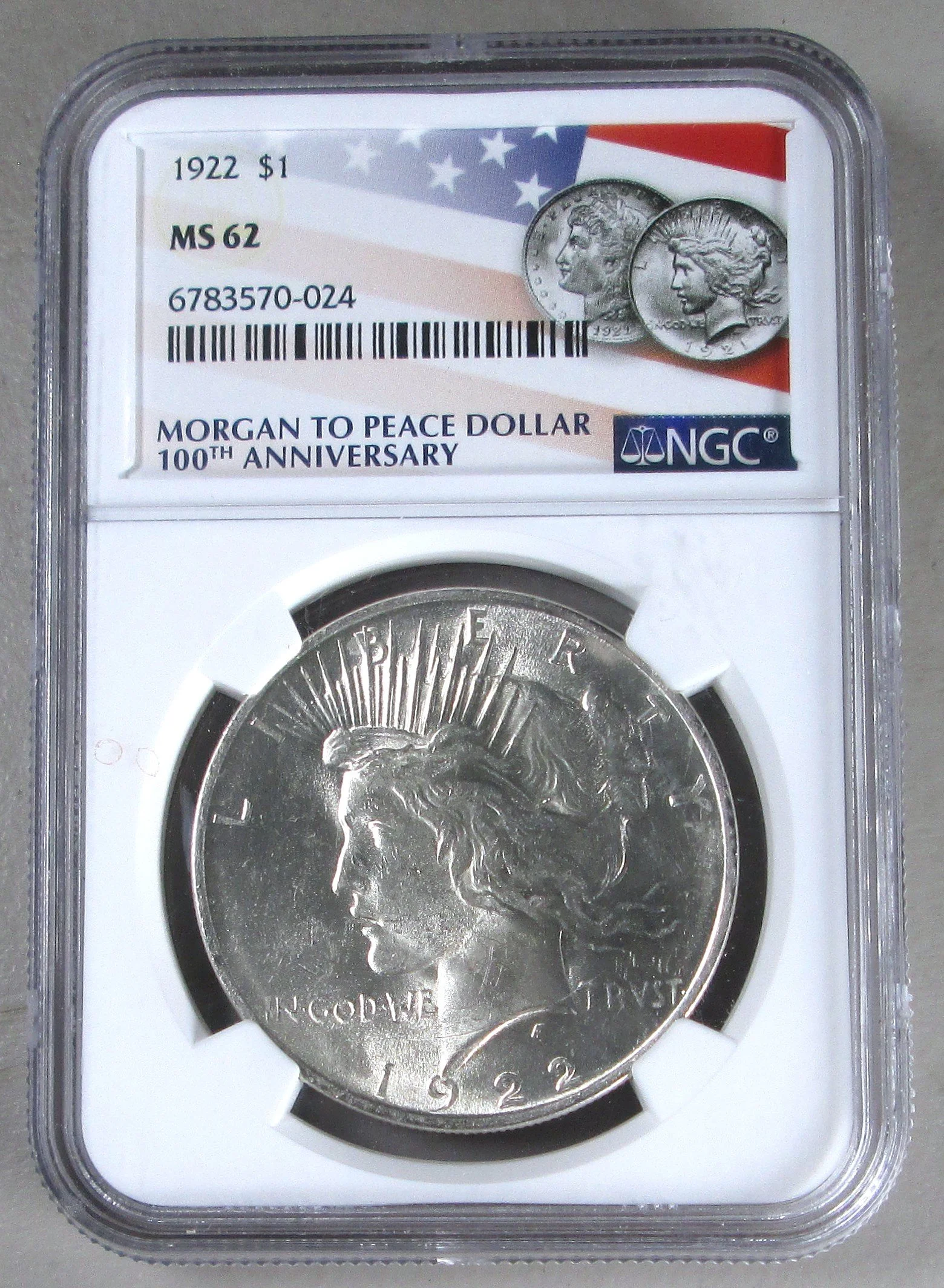
This coin is a 1922 Philadelphia minted Peace Dollar in Mint State 62.
NGC Certified MS62.
To commemorate the end of World War I and honor world peace, the United States created the first Peace Dollar in late December 1921. This Silver Peace Dollar was produced intermittently from 1921 to 1928 and again in 1934 and 1935 at three United States Mint facilities in Denver, San Francisco, and Philadelphia. The mint marks on the Peace Dollar can be found on the reverse side of the coin, below the word ONE.
Designed by Anthony De Francisci in early 1921, a modern Art Deco Liberty Head with a crown of rays was depicted on the Obverse and a bold, majestic eagle at rest on a high mountain top, clutching the laurel wreath of Peach in his talons, on the reverse.
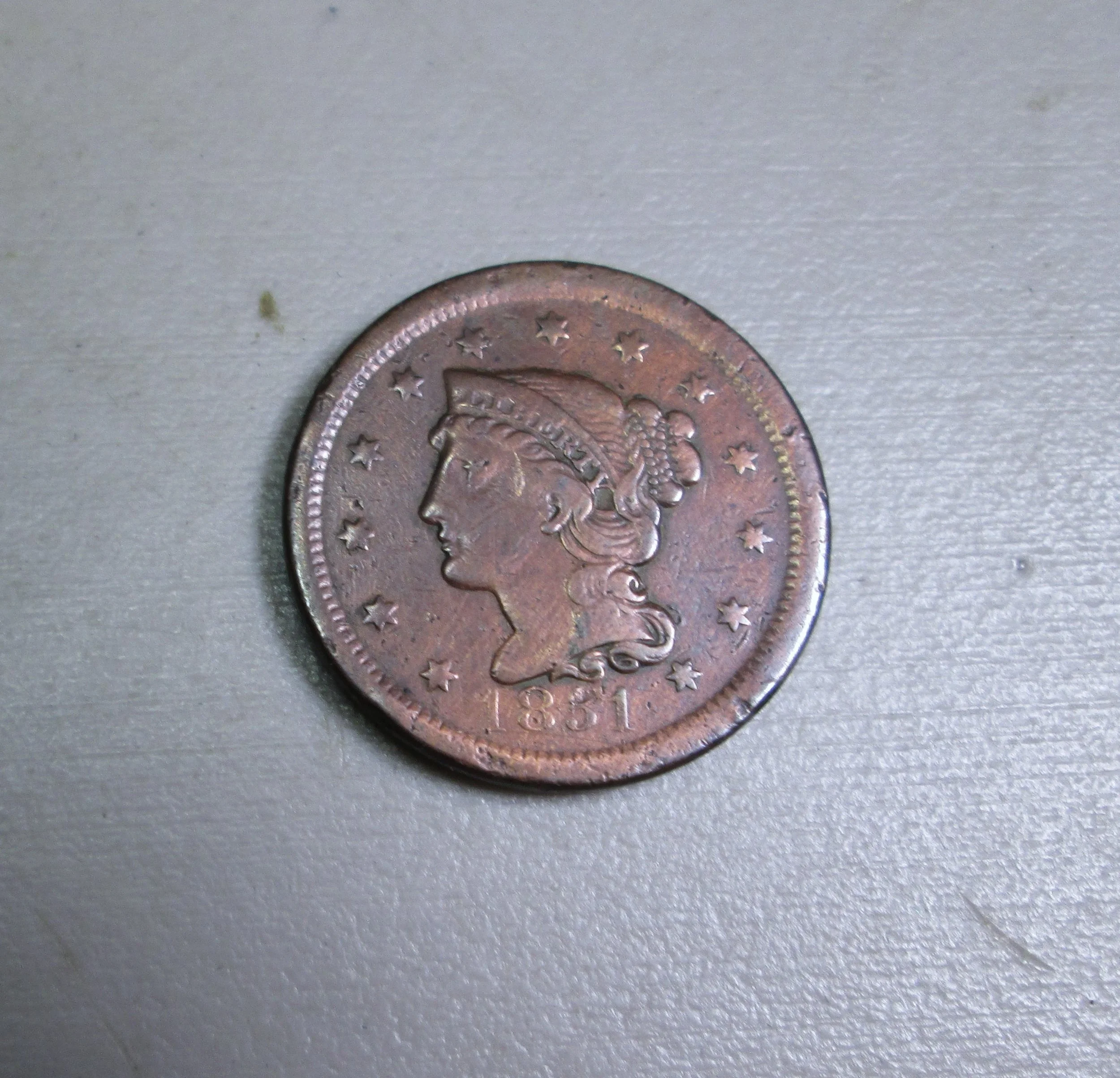
The final large-cent design began in late 1839 as a continuation of designer Christian Gobrecht’s refinements. After a number of adjustments to Liberty’s head through the late 1830s, the final “Petite Head with Braided Hair” design was temporarily set and used for the next four years. In late 1843, an added refinement was made to the features, resulting in the “Mature Head with Braided Hair” design. This design remained through the end of large-cent production. Production through this period was generous and peaked at almost 10 million minted in 1851. Only the last year, 1857, had a mintage below 1 Million (333,546). This design was replaced was a new, smaller coin of copper/nickel composition - the Flying Eagle cent.
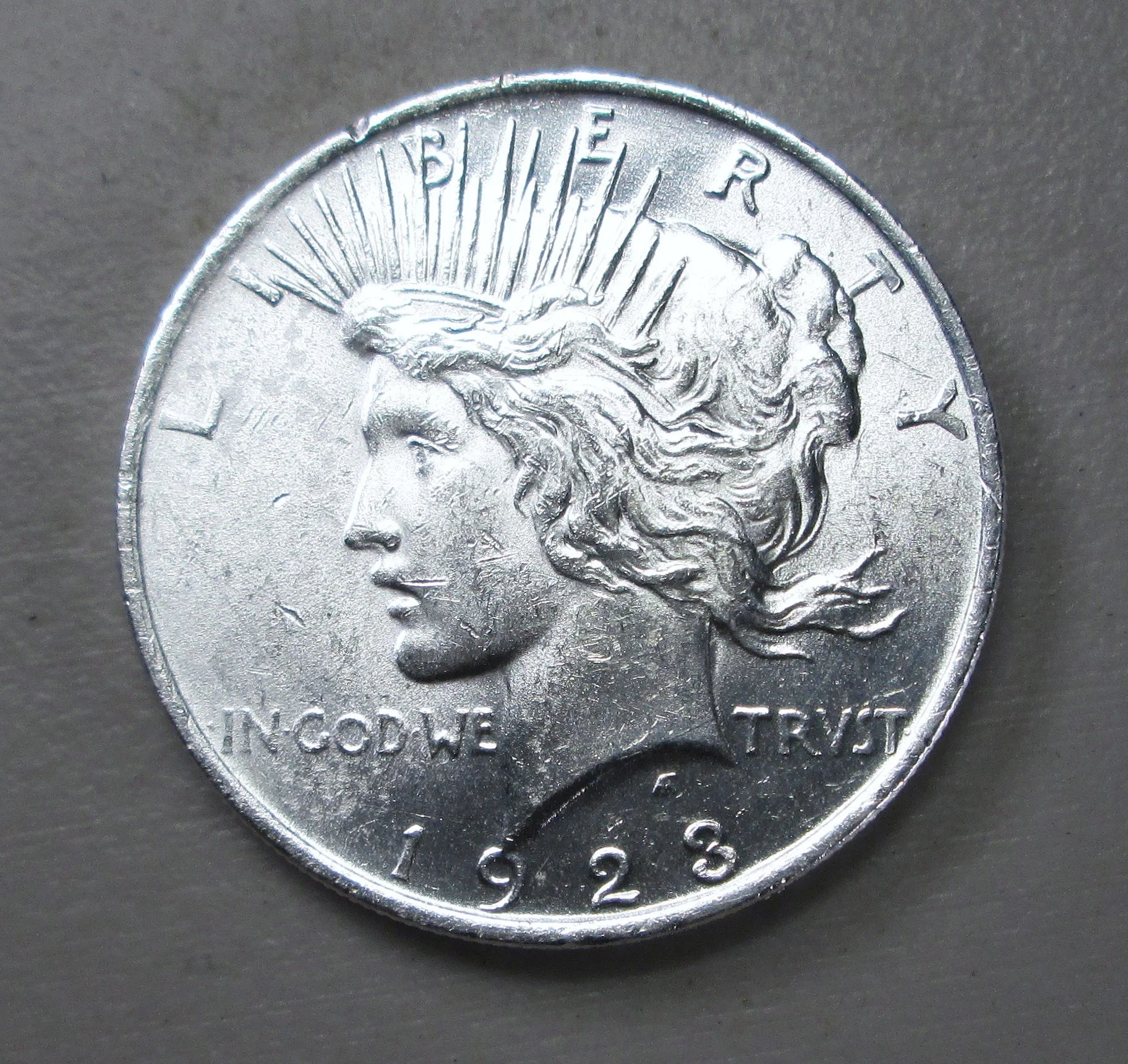
This coin is a 1923 Philadelphia minted Peace Dollar in Uncirculated condition.
To commemorate the end of World War I and honor world peace, the United States created the first Peace Dollar in late December 1921. This Silver Peace Dollar was produced intermittently from 1921 to 1928 and again in 1934 and 1935 at three United States Mint facilities in Denver, San Francisco, and Philadelphia. The mint marks on the Peace Dollar can be found on the reverse side of the coin, below the word ONE.
Designed by Anthony De Francisci in early 1921, a modern Art Deco Liberty Head with a crown of rays was depicted on the Obverse and a bold, majestic eagle at rest on a high mountain top, clutching the laurel wreath of Peach in his talons, on the reverse.
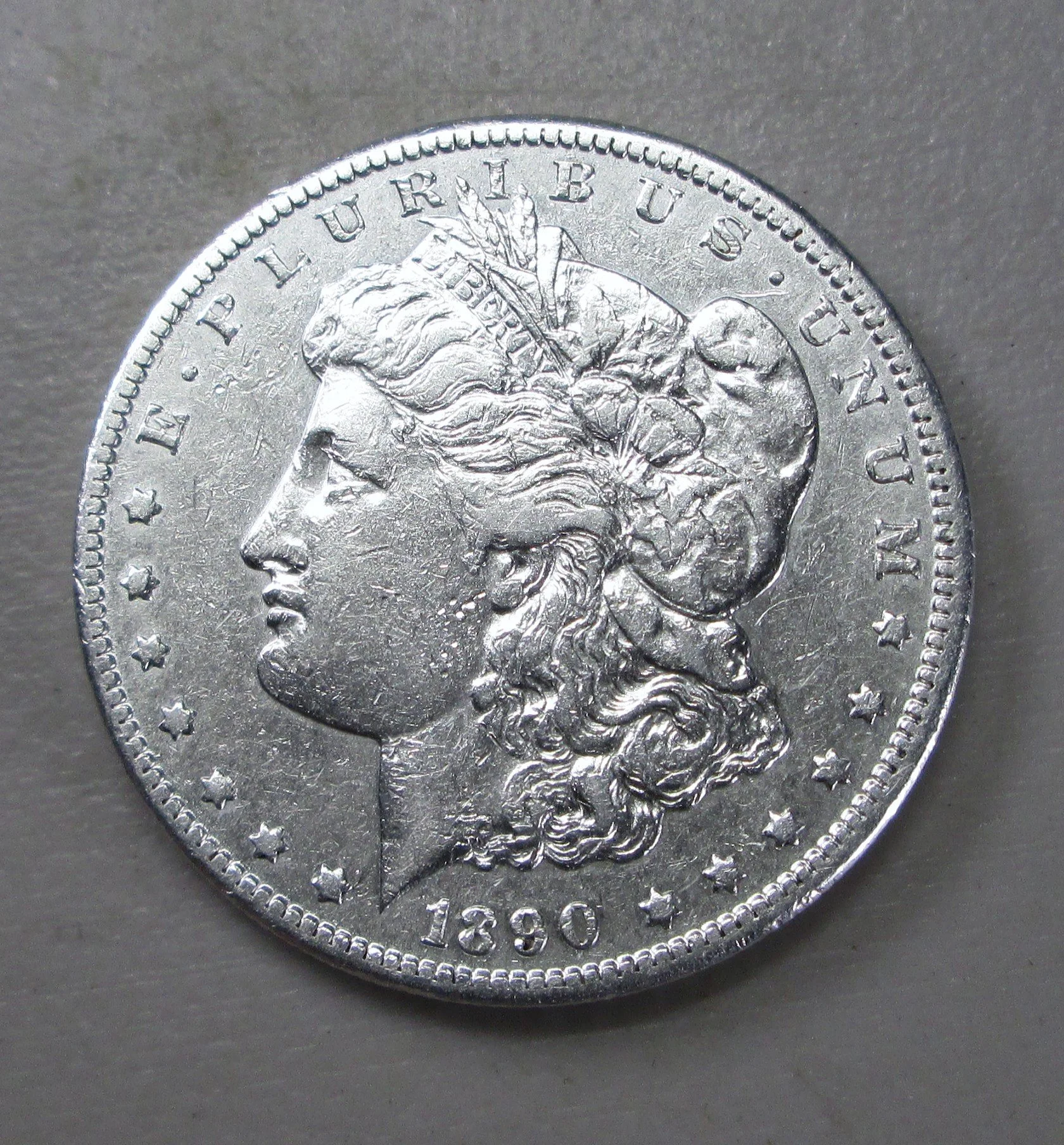
This is a 1890 Carson City mint, Morgan dollar. It is Almost Uncirculated condition.
Minted from 1878 to 1904, then again in 1921, before retiring as America’s most popular coin. Morgan Dollars are called the “King of America’s Coins” for a good reason: they helped the United States grow the western frontier and fueled the engines of American industrialization. During the late 19th Century, the Morgan Dollar became a rallying point in politics between the Eastern Bankers, known as the “Goldbugs,” and the Western Silver Mining interests, dubbed the “Silverites.” They contributed to one of America’s major economic depressions, the Panic of 1893, and became a major political platform in the 1896 and 1900 Presidential elections. The “Gold” or Silver” bimetallism debate over the monetary standard gave the politicians much to argue about.
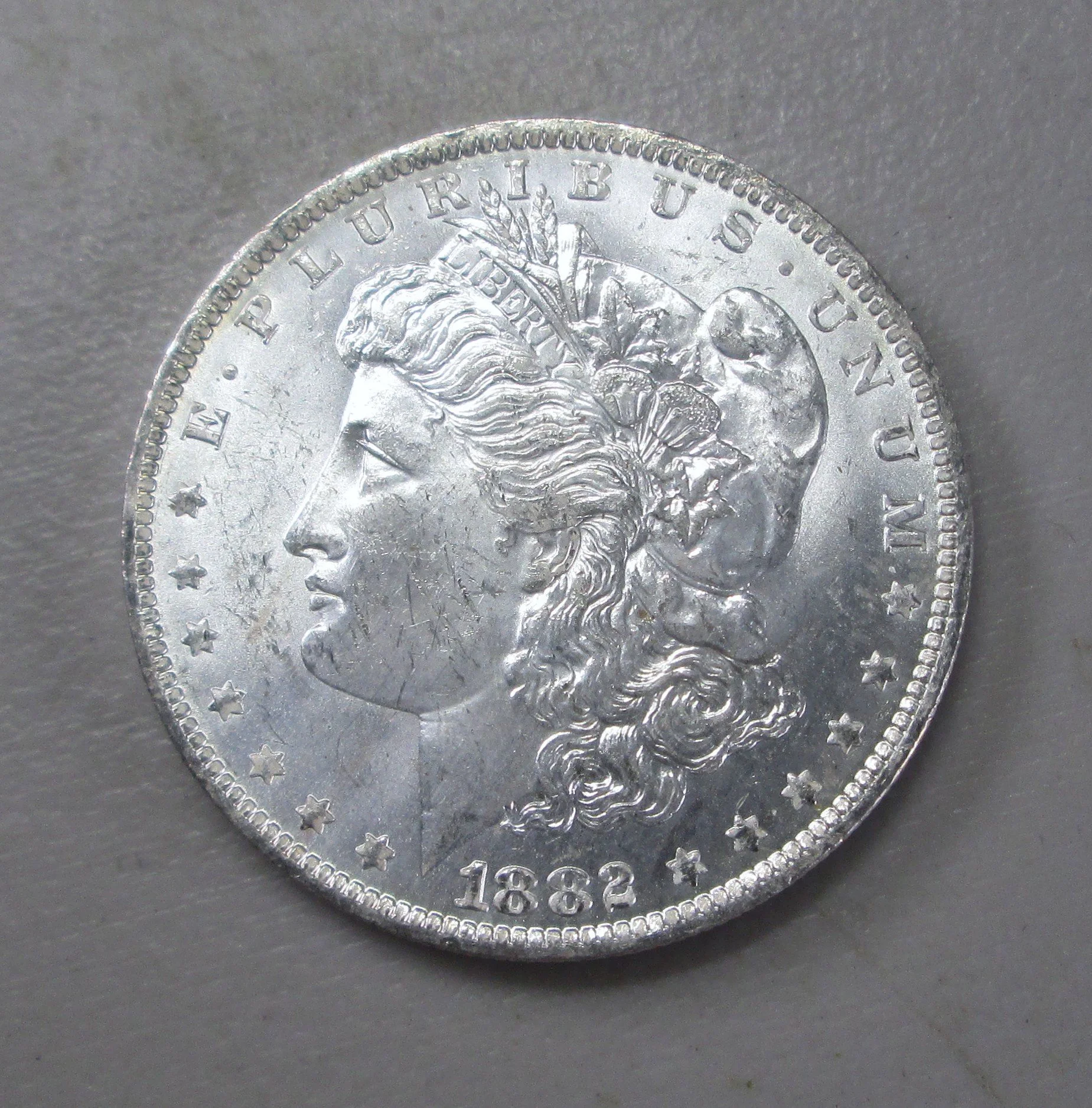
This is a 1882 New Orleans mint, Morgan dollar. It appears to be an uncirculated.
Minted from 1878 to 1904, then again in 1921, before retiring as America’s most popular coin. Morgan Dollars are called the “King of America’s Coins” for a good reason: they helped the United States grow the western frontier and fueled the engines of American industrialization. During the late 19th Century, the Morgan Dollar became a rallying point in politics between the Eastern Bankers, known as the “Goldbugs,” and the Western Silver Mining interests, dubbed the “Silverites.” They contributed to one of America’s major economic depressions, the Panic of 1893, and became a major political platform in the 1896 and 1900 Presidential elections. The “Gold” or Silver” bimetallism debate over the monetary standard gave the politicians much to argue about.
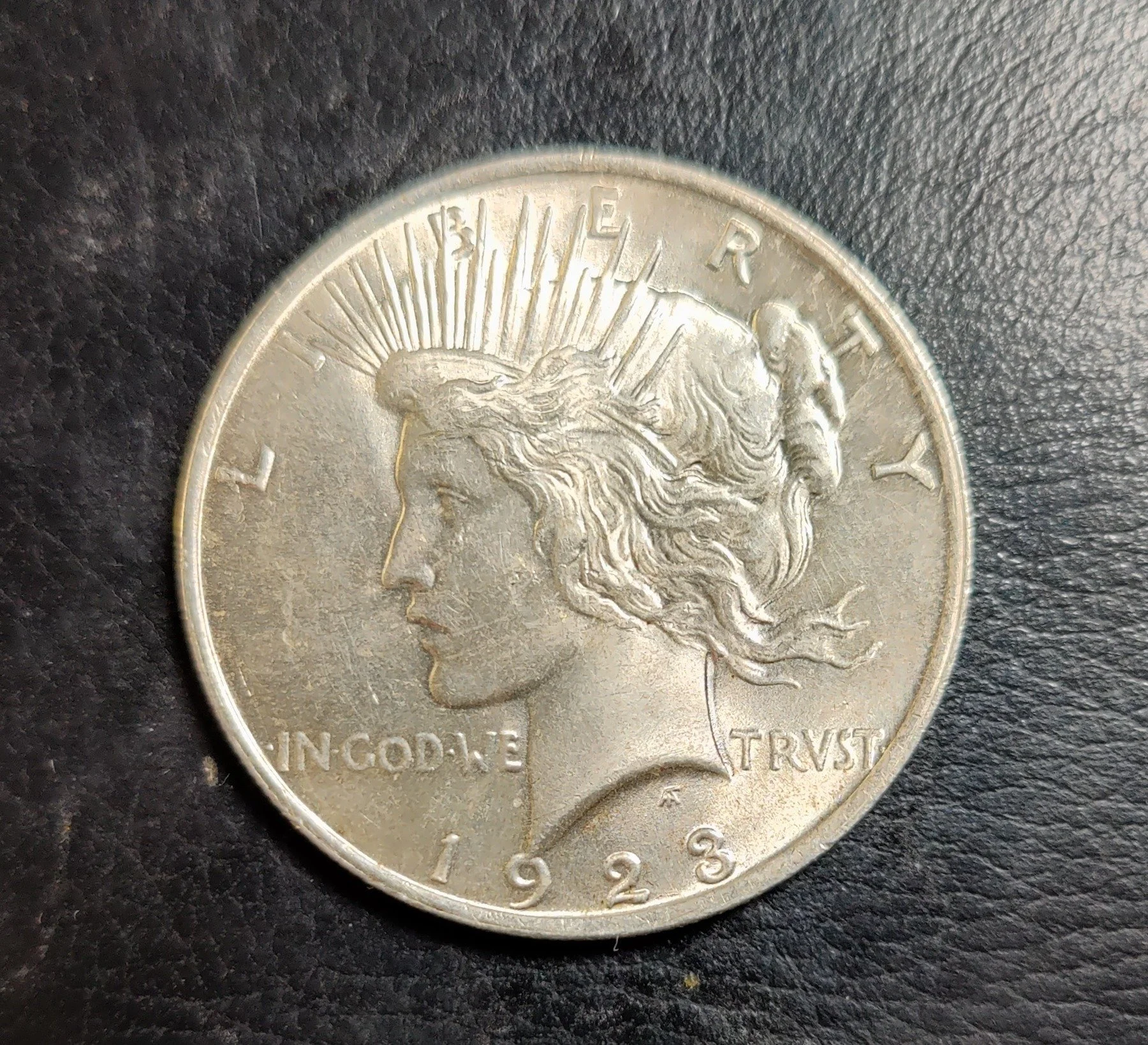
This coin is a 1923 Philadelphia minted Peace Dollar in Uncirculated condition.
To commemorate the end of World War I and honor world peace, the United States created the first Peace Dollar in late December 1921. This Silver Peace Dollar was produced intermittently from 1921 to 1928 and again in 1934 and 1935 at three United States Mint facilities in Denver, San Francisco, and Philadelphia. The mint marks on the Peace Dollar can be found on the reverse side of the coin, below the word ONE.
Designed by Anthony De Francisci in early 1921, a modern Art Deco Liberty Head with a crown of rays was depicted on the Obverse and a bold, majestic eagle at rest on a high mountain top, clutching the laurel wreath of Peach in his talons, on the reverse.
This is a 1964 Philadelphia Mint Kennedy Half Dollar. It is in Uncirculated Condition and has a nice luster.
This is a 1964 Denver Mint Kennedy Half Dollar. It is in Uncirculated Condition and has a nice luster.
Start Your Order Today !
Tell us what you’re dreaming of and we’ll reach out to craft something special together.